The Role of Batteries in Real-Time Robots and Physical AI Systems
As robots transition from controlled research labs to real-world deployments, the relationship between power delivery and Physical AI is becoming foundational.
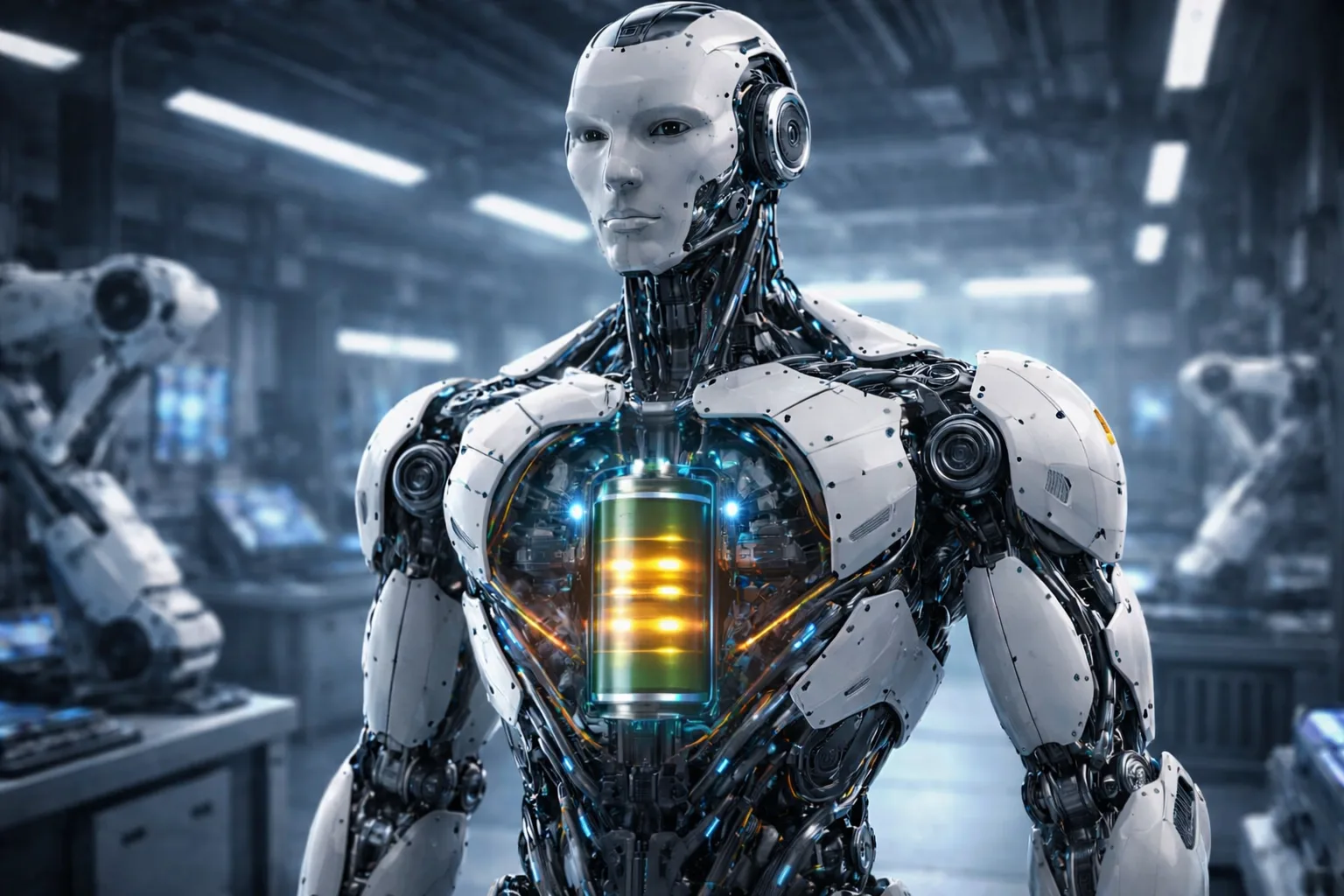
Batteries are becoming the key component that enables the next generation of physical AI, providing the power necessary for real-time sensing, computing, and actuation. As robots transition from controlled research labs to real-world deployments, the relationship between power delivery and physical intelligence is becoming foundational. Robots cannot be intelligent if their batteries cannot keep up with sensing, computing, and actuation. Power delivery shapes robotic intelligence, determines the capabilities of physical AI, affects performance through energy latency, and drives the evolution of batteries from passive energy stores into integral components of the control system.
Physical AI in Practice
In the robotics world, “physical AI” refers to systems that do more than just process data or execute scripted motions. Indeed, these systems perceive their environment, reason about it, and act on it in real time, all without reliance on distant cloud services. Physical AI combines sensors, onboard computation, and mechanical actuation into closed-loop decision-making systems that must respond to changes in milliseconds to navigate dynamic, unstructured environments. The future of physical AI depends on power-efficient systems capable of carrying out perception and control tasks on board, delivering real-time responses without delays or heavy energy demands.
How Power Influences Real-Time Robotic Control
In physical AI, rapid coordination between sensing, computation, and actuation is essential for reliable performance. Any lag or variation in energy supply can compromise the precision and timing of motor responses, which are critical for maintaining balance, executing delicate manipulations, or reacting to unexpected changes in the environment. Advanced sensors and processors can operate at microsecond scales, but their effectiveness is limited if the battery cannot deliver current consistently and quickly.
Batteries are no longer passive components at the edge of the control system. Their ability to provide uniform and immediate energy directly impacts how fast and accurately a robot can respond. When a robot requires sudden bursts of power, such as during a rapid shift in balance or a high-speed movement, any delay or drop in voltage translates to slower actuation and diminished control. Beyond efficiency, uneven or delayed power delivery imposes a fundamental limit on physical intelligence.
Therefore, robotic systems must integrate energy delivery into their control considerations. Actuators draw high current peaks during dynamic movements, and batteries with insufficient response or uneven output can throttle the entire system. With most humanoid robots running only two to four hours under typical workloads, overcoming these energy delivery challenges is crucial to enabling longer, more capable, and more intelligent operations.
Latency in Power Delivery = Latency in Intelligence
While in digital systems, latency refers to delay between input and output, in robotics, latency matters both in decision making and in power delivery. Robots must make decisions in milliseconds and those decisions must trigger actuators that move as expected. If the battery cannot supply a sudden surge of current due to internal resistance or uneven cell response, the actuation lags, creating a period of unresponsiveness that cascades through the control loop. Real-time energy profiling and predictive power management allow robots to anticipate rapid changes in load, ensuring consistent performance instead of reacting to delays after they occur.
Even minimal delays can compromise balance, requiring sensors, processors, and motors to act within milliseconds to maintain stability. Indeed, To prevent a humanoid from tipping over, the sensors must detect a shift, the processor must compute a counter movement, and the motors must apply torque, all within tens of milliseconds. Any lag in the energy supply during that sequence causes slower corrective action, reducing precision and risking failure. This interplay highlights that energy delivery speed directly constrains control loop performance, making batteries an active part of the intelligence stack rather than a background component.

How Uneven Power Delivery Affects Balance Precision Safety
Uneven power delivery in robots reduces runtime, and degrades balance, precision, and safety. When different parts of a robot receive inconsistent current flows, the motion becomes unpredictable. For example, an actuator that should produce smooth torque might produce jerky, uneven motion if its supply voltage fluctuates. This results in poor balance control and increased mechanical stress, potentially tipping a robot or damaging delicate mechanisms.
Precision tasks such as grasping small or fragile objects require fine grained control over motor torque and speed. If the power supply cannot maintain uniform current when sensors and processors demand bursts of energy, precision degrades. In critical applications, industrial automation, healthcare assistance, or human robot collaboration, such degradation is a safety risk. Robots interacting with humans must maintain reliable, consistent motion. Power transients and irregular delivery can lead to surprises that put people or equipment at risk.
Batteries As Part of the Control Stack
The traditional view of batteries as passive, separate components is shifting. In cutting edge robotics systems, battery management systems (BMS) and embedded power electronics now interplay directly with control logic to balance energy flow in real time. Rather than only reporting state of charge, modern BMS can control power distribution to optimise performance and longevity. In robotics, integrating power prediction with navigation and actuation helps robots anticipate energy needs, improving control stability and behaviour. As a result, real-time power prediction models can reduce unnecessary power draw while ensuring peak current is available when needed, closing the loop between energy supply and physical action.
The Need for Predictable Uniform Current Distribution
For physical AI systems, predictable, uniform current distribution is essential. Robots with uneven power distribution suffer from inconsistent performance, which undermines both reliability and autonomy. Future systems will require batteries that power electronics that deliver deterministic energy responses, and power that matches demand exactly when it is needed. Indeed, predictable current delivery enables tighter integration between energy source and control algorithms, supporting the low latency decision making necessary for real world physical AI. As such, by enabling predictable current delivery, the battery becomes a coequal partner in the control stack, coordinating with sensors and processors to support coherent, responsive action.
Enabling Real-Time Physical Intelligence with Addionics
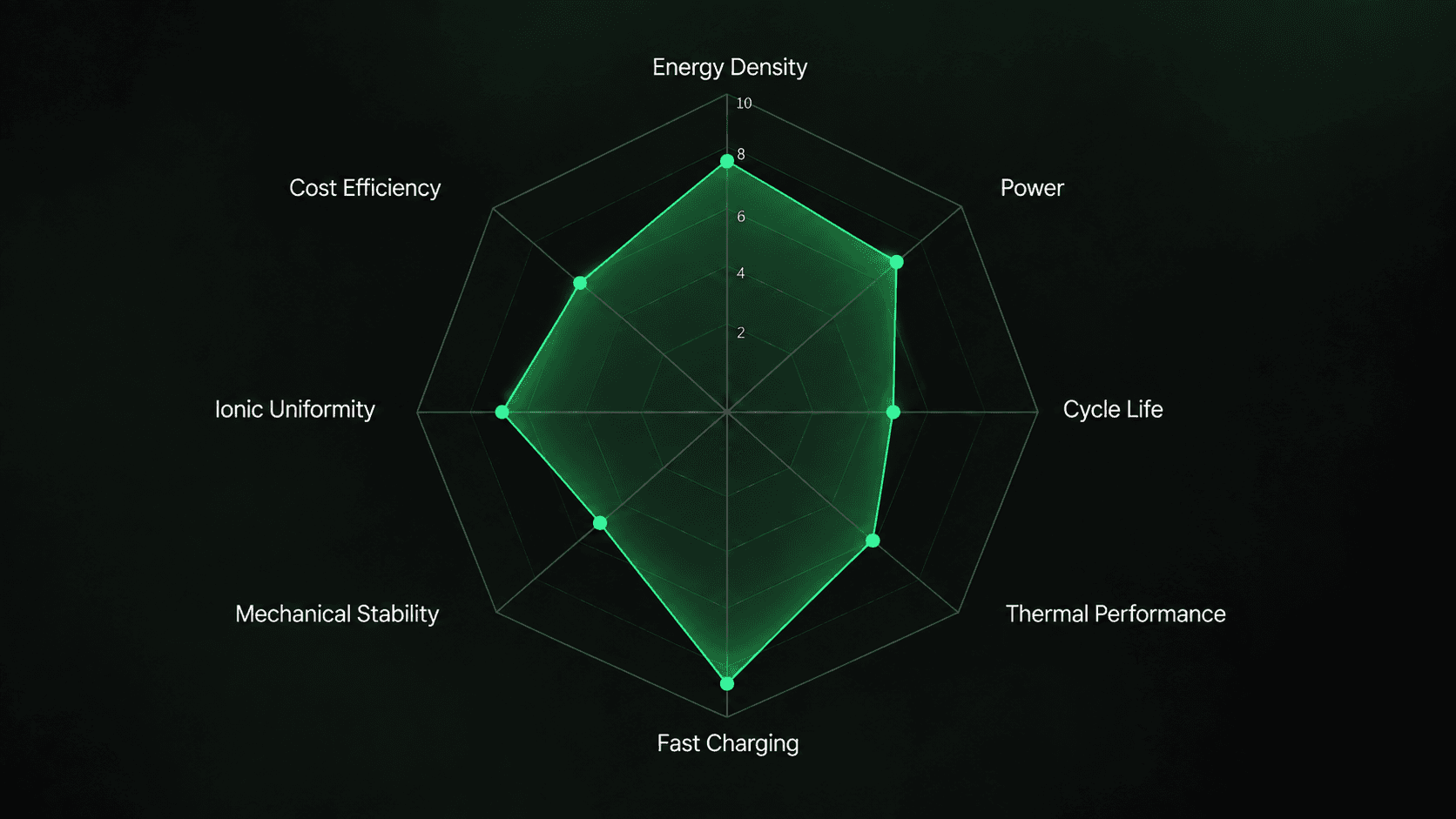
Battery architecture goes beyond determining capacity and form factor, instead defining how quickly and reliably energy can flow through a system. As AI accelerates across defence, space, robotics and advanced computing, energy cannot remain a secondary component in system design. The next leap in innovation requires rethinking the battery itself and designing specialized energy sources in parallel with the systems they power. High energy density cells offer longer runtime, but high internal resistance or unstable thermal behaviour can limit real-time performance. Without this fundamental redesign of the energy source, progress slows and the full impact of AI on our world cannot be realized. Addionics is tackling this by using AI-driven design to engineer advanced cell architectures that optimize performance according to each application.
At the core is Addionics Porous 3D Current Collector, one element within a broader solution that integrates smart metals, manufacturable design, and an AI-based continuous feedback loop from design to operation to end-of-life. Addionics’ structural design and tailored materials improve current distribution and reduce resistance, ensuring stable power delivery under rapid load changes. By enhancing both energy density and power response, Addionics technology helps robots sustain real-time intelligence loops longer and with greater reliability. This results in more predictable actuation, improved balance and precision, and safer operations in dynamic environments.
From autonomous robots to satellites transforming data in orbit and solar-powered AI infrastructure in space, every breakthrough depends on how energy is stored and delivered. In a world where AI performance depends on energy speed, Addionics enables robotics and intelligent systems to surpass current limits.
Explore Addionics’ technology or contact us for collaboration opportunities.