The Heartbeat in the Void: Why the New Space Age Hinges on a Battery Revolution
As 100,000 satellites are expected to launch by 2030, space battery technology is becoming critical, determining satellite lifespan, economic viability and orbital sustainability.
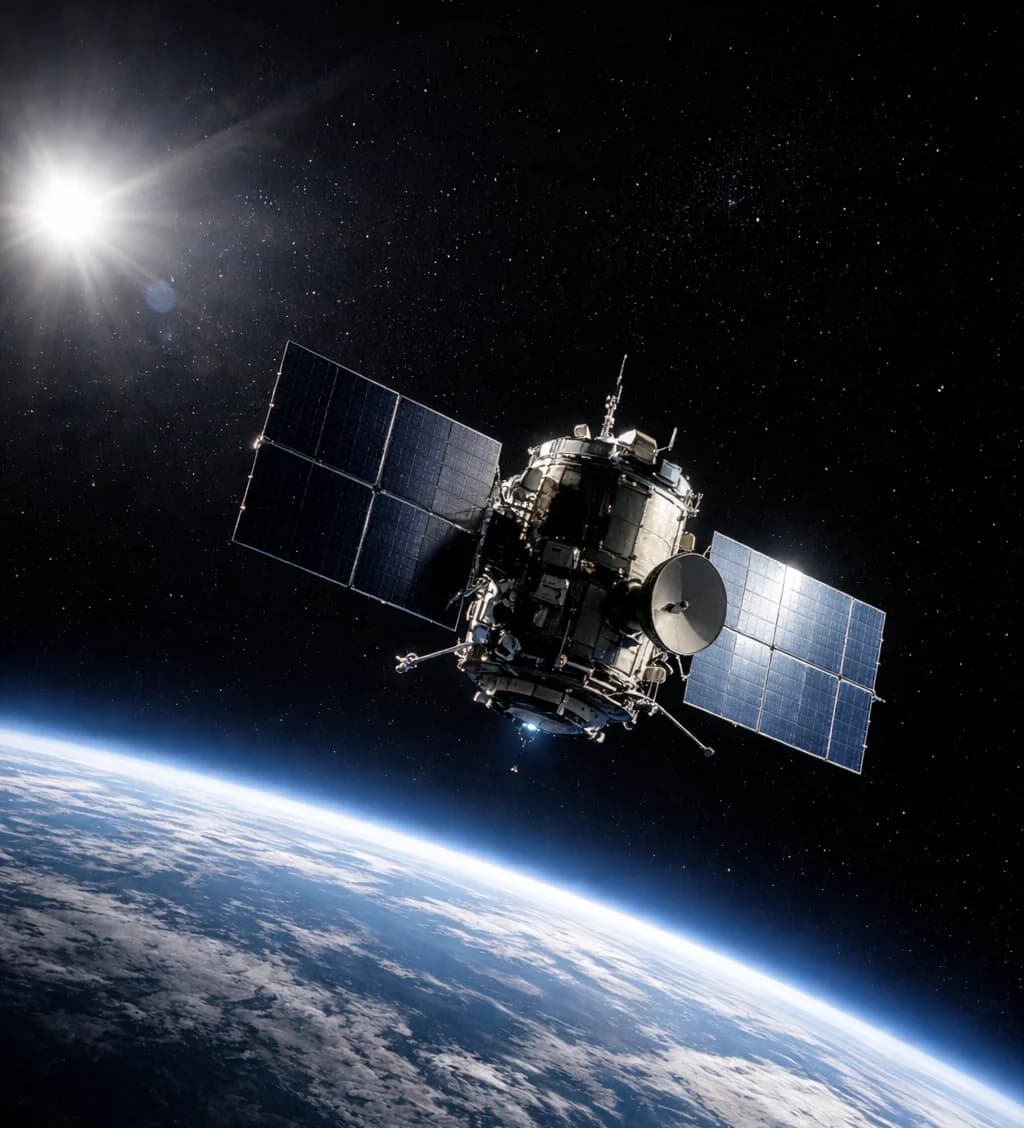
Imagine a single piece of hardware traveling at 28,000 kilometers per hour, orbiting the Earth every 90 minutes. Isolated and unreachable, it operates in one of the most hostile environments known to physics.
For one hour, it bathes in intense sunlight, its solar panels drinking in energy. Then it abruptly moves into Earth’s shadow, where the next thirty minutes are spent in freezing darkness, with power generation temporarily suspended as the system relies on stored energy reserves. The entire mission, the sensors, the communications, the guidance, relies instantly and totally on one component: the battery.
This doesn't happen once. It happens 18 times a day. Every single day. For at least five years.
That is roughly 25,000 charge and discharge cycles over five years. To put that in perspective, a smartphone battery begins to degrade after just 500.
In the rapidly expanding commercial space sector, where 100,000 new satellites are projected to launch by 2030, this relentless rhythm creates a quiet but deadly crisis. The battery has become the limiting factor of the "New Space" economy. Satellite lifespan, profitability, and even the risk of becoming dangerous space debris are ultimately determined by its performance.
The Tyranny of the Shallow Cycle
For decades, space engineers have battled battery chemistry, knowing standard batteries cannot survive 25,000 deep charge cycles. The stress on the materials is simply too high and the degradation is too fast.
As a result, the industry adopted a "survival strategy": baby the battery.
To make a battery last five years, engineers artificially restrict its workload. They force it to operate within a narrow "safe zone", typically using only about 30-40% of its capacity (for example: cycling between 30% and 70%).
This survival strategy comes with a massive price tag. As only a fraction of each cell’s potential energy is used, more fly cells are needed to meet the mission’s power needs.
- You need more energy? You add more batteries.
- You add more batteries? You add more weight.
- You add more weight? You pay a fortune in launch costs.
In the commercial space race, where margins are razor-thin and launch costs are calculated by the kilogram, this inefficiency is a financial anchor. Companies effectively pay millions to launch "dead weight" batteries that are heavy, expensive, and largely unused, just to ensure they don't die prematurely.
Space is Not Just a "High-Flying EV"
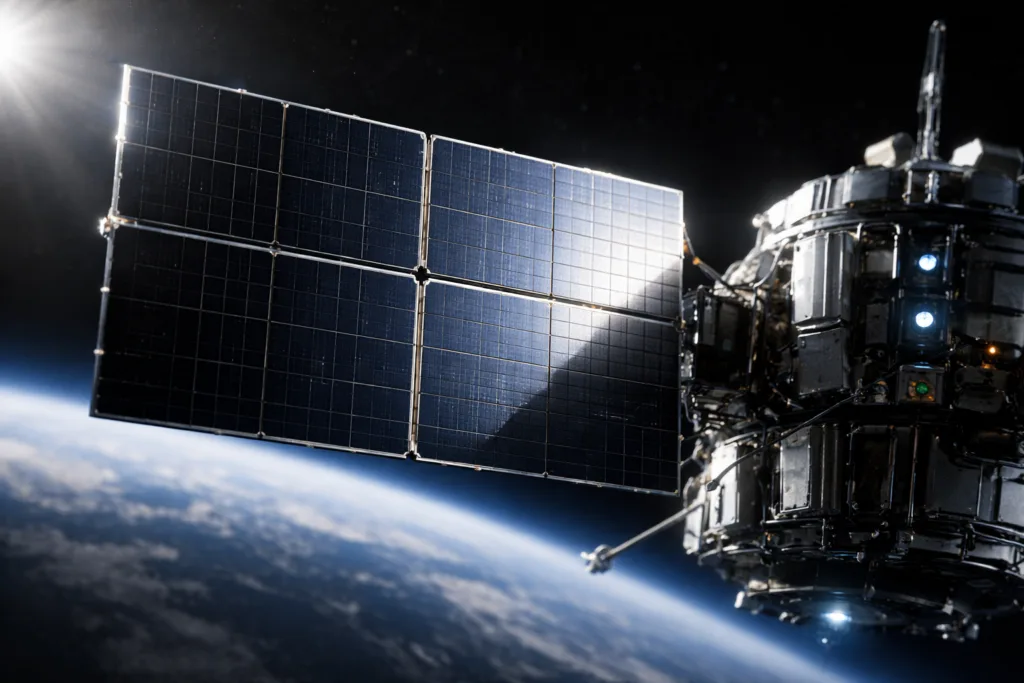
As EV lithium-ion cells costs fall, copying automotive batteries into satellites may seem attractive, but this approach is flawed. A Tesla on a highway does not face the thermal vacuum of Low Earth Orbit (LEO), nor does it experience radiation spikes or the mechanical violence of a rocket launch. EV batteries are mass-produced for mild terrestrial climates and low-cost manufacturing whereas space batteries require tailor-made precision.
Treating the battery as a "black box", a standard component dropped into the satellite at the last minute, is a relic of the past. Today’s missions demand system-level integration, where the battery is designed in concert with the satellite’s thermal and mechanical skeleton. We need batteries that are not just "good enough" for a car, but optimized for the distinct, brutal realities of the void.
Changing the Physics: The Addionics Breakthrough
This is where the narrative shifts. The industry has hit a wall with traditional battery chemistry, but the solution isn't just better chemistry, it's better physics.
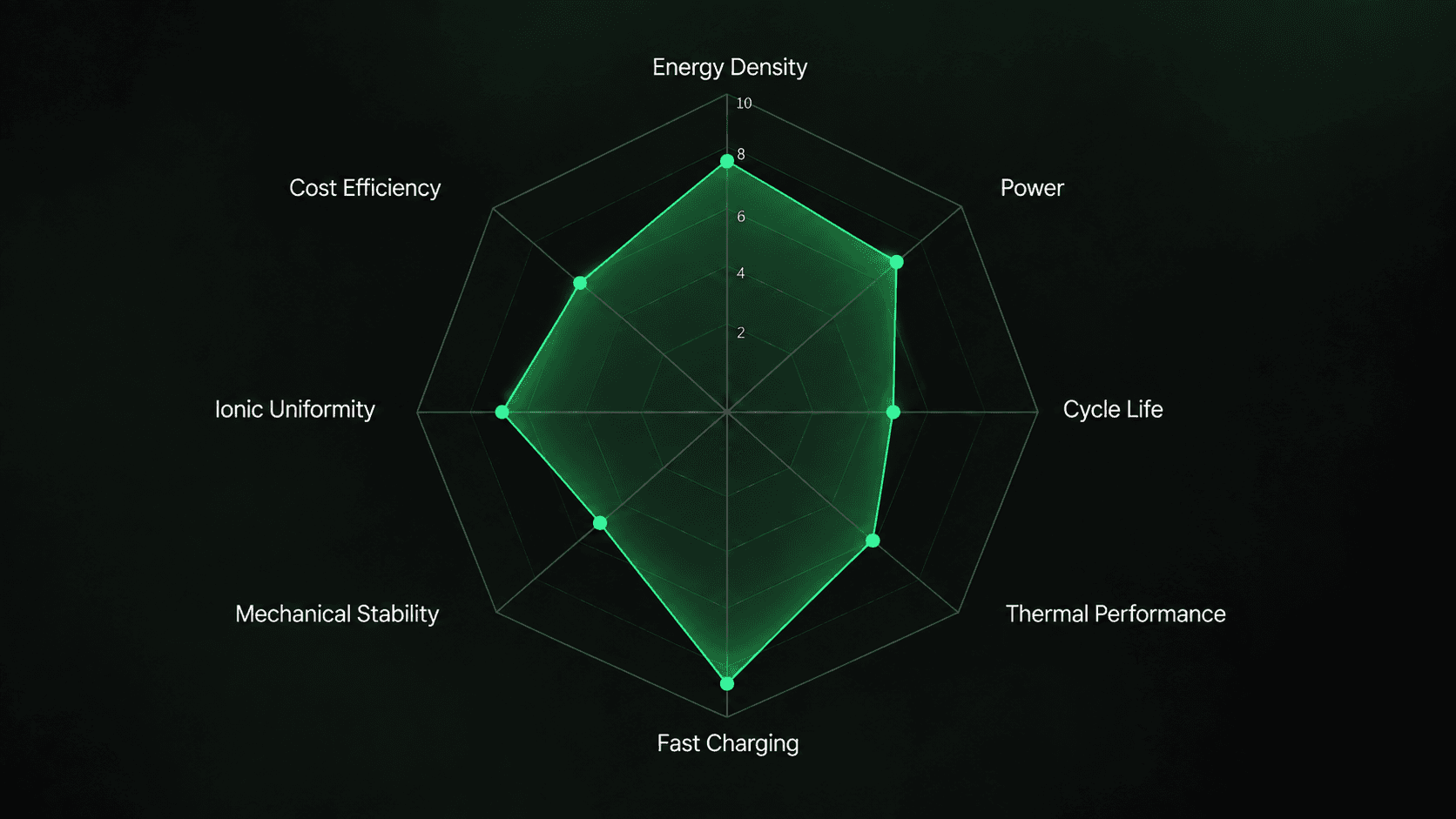
Standard batteries use 2D metal foils, flat, simple surfaces that limit performance. Addionics has reimagined the fundamental architecture of the battery cell, replacing those flat foils with 3D porous Current Collectors. This porous, conductive skeleton enhances the mechanical integrity of the electrodes and allows electrolyte and ions to move faster and with less resistance, significantly lowering the heat and stress generated during those punishing 18 daily cycles.
This structural revolution allows us to break the "Tyranny of the Shallow Cycle."
As Addionics cells handle stress better, the operational window can be safely widened from the industry-standard 40% to 60%.
- The Impact: We can extract significantly more usable energy from every single cell without sacrificing its lifespan.
- The Result: We can slash the number of cells required for the mission.
Suddenly, the "weight spiral" reverses. Fewer batteries mean a lighter satellite. A lighter satellite means cheaper launch costs or more room for revenue-generating payloads, transforming the economics of the mission.
From "Spartan" Relays to "Smart" Supercomputers
There is one final chapter to this story: Usability.
In the past, satellites were “Spartan”, simple, low-power relay systems designed primarily for survival. The next generation are flying supercomputers, built to run AI models in orbit, process video in real time, and perform autonomous manoeuvres.
You cannot run a "smart" satellite on a "dumb" battery.
These advanced functions require massive bursts of power that would crush a standard battery, causing voltage sags that crash the system. Addionics’ low-resistance 3D architecture provides the high-power stability needed to run advanced processors, enabling the satellite to evolve from a survival-focused platform into a high-performance machine.
The Verdict
As humanity prepares to launch tens of thousands of new satellites, we face a choice. We can either continue cluttering the orbit with heavy, inefficient hardware destined to become debris the moment its weak batteries fail, or we can adopt a new standard.
The battery is the heartbeat of the mission and by fixing it, we don't just save weight or money, we ensure that the New Space economy has the power to thrive.