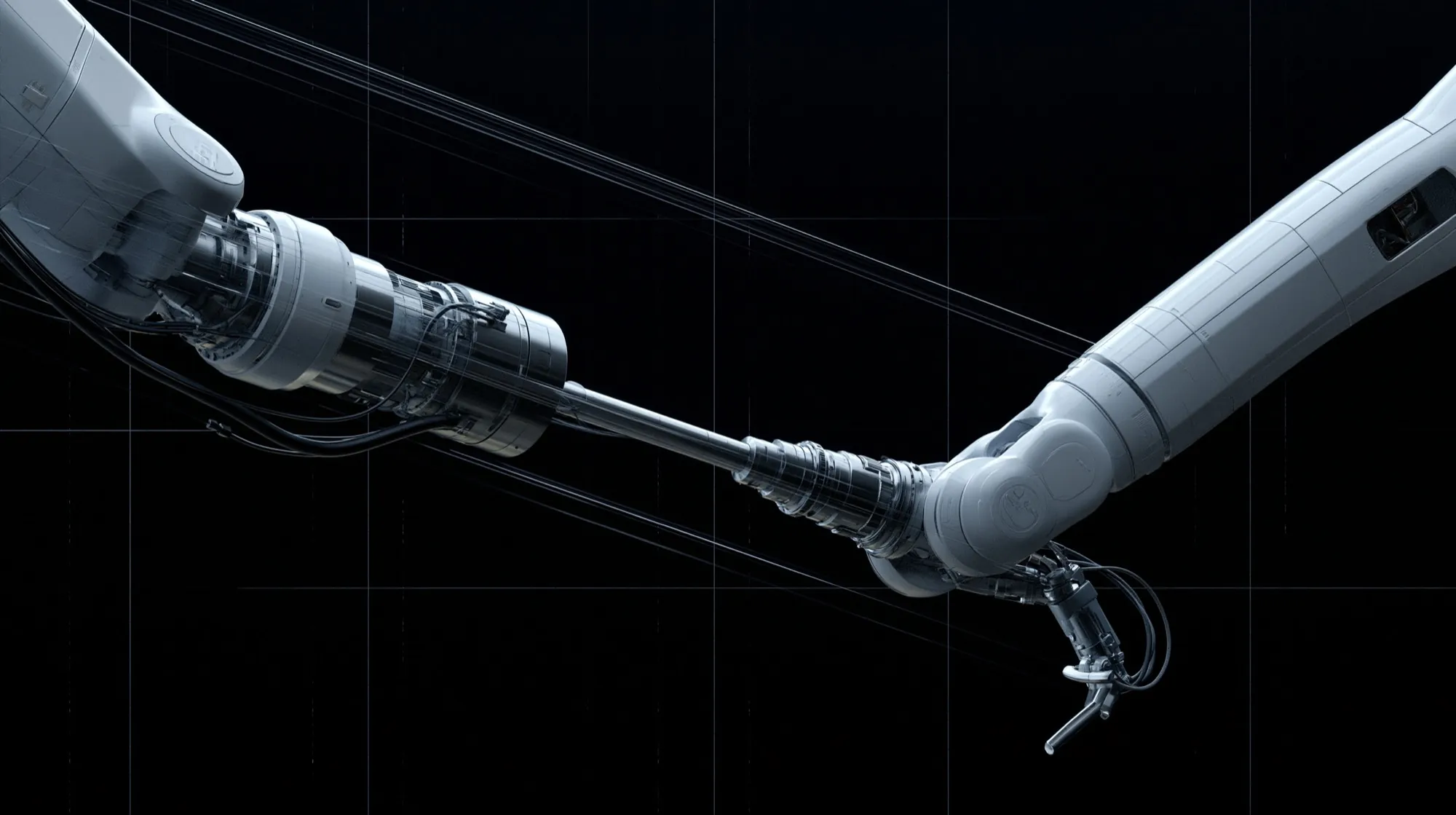
Robots are becoming part of everyday infrastructure
Humanoid, mobile, and industrial robots are moving from controlled environments into warehouses, hospitals, homes, logistics networks, and field operations.
As these systems take on more complex work, their value depends on how long they can operate, how quickly they can respond, and how reliably they can return to service. Intelligence may guide the machine, but the battery determines how much useful work it can perform.
01Robotics
Addionics redesigns the cell for robotics, enabling longer runtime, predictable power delivery, faster recharge, and stable repeated operation within tight mass and volume constraints.
02What it delivers
- 01Longer productive runtime
- 02Real-time power response
- 03Faster return to service
- 04More capability in less space
03The demand
The battery is becoming the limit of physical AI
Robots combine sensors, onboard computing, and actuators that must respond together in real time. Walking, balancing, lifting, grasping, and navigating create rapidly changing power demands that conventional cells were not designed to handle consistently.
At the same time, short runtime, frequent charging, heat generation, and repeated cycling reduce productivity. For fleet operators, the result can be more docking events, larger fleets, greater charging infrastructure, and less useful work from each machine.
For high-utilization robotic systems, the battery must repeatedly discharge, recharge, and return to operation with limited time for internal recovery. Over time, this can reduce usable capacity, shorten battery life, and make performance less predictable.
Intelligence guides the machine.The battery decides how much work it gets done.
04How it works
Designing the cell for robotic operation
Addionics improves the internal pathways that move ions, electrons, electrolyte, and heat through the cell. This supports faster power response, more stable cycling, and more efficient use of limited battery volume under the dynamic loads and short recovery windows common to robotic platforms and other physical AI systems.
- 01
Lower internal resistance
More efficient electrical pathways limit voltage drop and heat generation during sudden actuator loads and rapid charging.
- 02
More uniform current and heat distribution
More even electrochemical activity supports consistent power delivery for balance, precision, and repeated movement.
- 03
Improved ion and electrolyte transport
Additional through-plane pathways support rapid recharge and more stable operation across frequent charge-discharge cycles with limited rest.
- 04
Higher active material loading
Stronger electrode support enables more active material within the same footprint, increasing runtime without unnecessary battery size or weight.


Developing a humanoid, mobile, or industrial robot?
Let us discuss the battery performance and integration requirements of your platform.