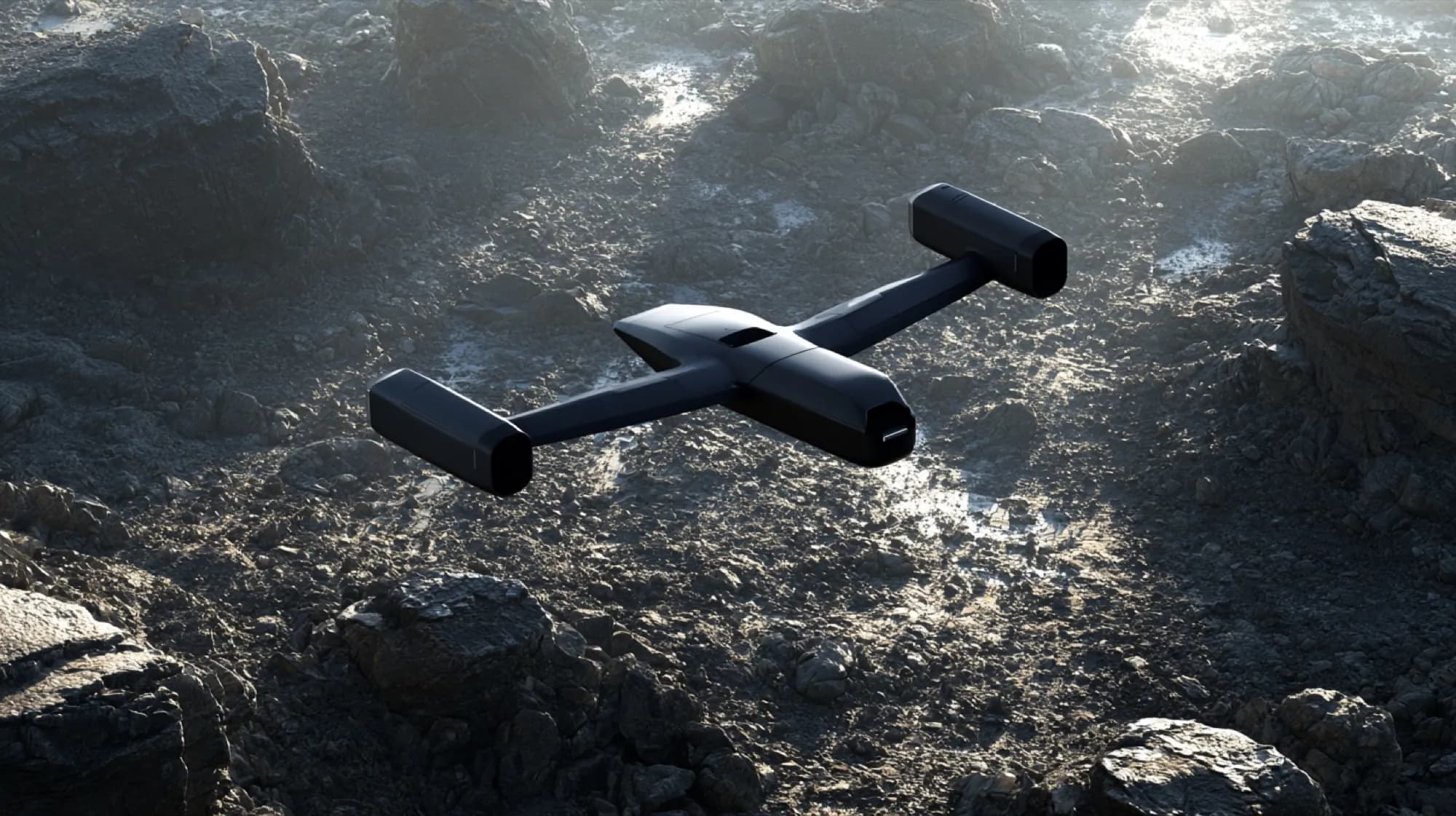
Power is becoming a tactical advantage
Drones, autonomous systems, robotics, connected soldier equipment, and space-based assets are changing how modern defense operates. Missions are becoming longer, more distributed, and increasingly dependent on electric power.
As these systems take on more demanding roles, battery performance directly affects endurance, payload, operational readiness, and mission capability. The next generation of defense platforms will depend on batteries designed around the mission, rather than systems forced to adapt to generic batteries.
Batteries are no longer about range. They are about power: the power to lead technology and win wars.
01Defense
Addionics redesigns the cell for the demands of defense, enabling more energy with less weight, stronger power delivery, faster recharge, and reliable operation under shock, vibration, and demanding field conditions.
02What it delivers
- 01More energy, less weight
- 02Stronger power delivery
- 03Rapid recharge readiness
- 04Rugged reliability
03The demand
The energy demands of modern defense
Modern defense systems require longer endurance, higher peak power, faster turnaround, and predictable operation across harsh and changing environments. At the same time, weight and volume remain tightly constrained.
Traditional battery design forces platforms to trade payload for endurance, power for lifetime, and performance for reliability. As systems become more electric and autonomous, these compromises increasingly limit mission duration and operational readiness.
In defense systems, battery performance directly shapes mission duration and readiness
04How it works
Designing the cell around the mission
Addionics improves the cell for defense by strengthening electrode stability, limiting internal resistance growth, supporting higher active material loading, and distributing current and heat more uniformly. This enables high-power operation, longer life, and reliable performance under repeated mission stress.
- 01
Improved electrode stability
Improved adhesion supports electrode integrity and helps reduce delamination risk under shock, vibration, and mechanical stress.
- 02
Lower resistance
Improved electrical pathways support efficient charge and discharge behavior while helping manage heat generation.
- 03
Higher active material loading
The architecture supports more active material within the electrode, enabling higher energy density without unnecessary added weight.
- 04
More uniform current and heat distribution
More even current and heat distribution supports stable performance during high-power operation.


Your mission is unique. Its battery should be too.
Let's design the right architecture for your application.