EMSI: The Hidden Bottleneck in 24/7 Operation
For decades, batteries were designed around human patterns of use. Phones, laptops, consumer devices, and even private electric vehicles typically operate…
For decades, batteries were designed around human patterns of use. Phones, laptops, consumer devices, and even private electric vehicles typically operate with natural pauses between use cycles. They are used, parked, plugged in, left idle, or charged overnight. In many cases, the battery has time to rest before the next cycle begins, allowing the cell to recover internally before it is pushed again.
That world is changing. The next era of electrification is being shaped by machines that are expected to keep working: robotaxis moving through cities, autonomous trucks operating across logistics networks, delivery drones returning to flight, industrial robots running across shifts, and space platforms operating for years without maintenance. These systems do not run on human schedules. They run on utilization, uptime, rapid recharge, and repeated deployment.
For these applications, fast charging is not just a convenience feature. It is part of the business model. Downtime reduces paid miles, limits mission frequency, disrupts logistics, lowers productivity, and increases operating cost. This creates a new battery requirement: cells that can support repeated discharge, rapid recharge, and fast redeployment with limited time for internal recovery.
And that is where EMSI becomes important.
What Is EMSI?
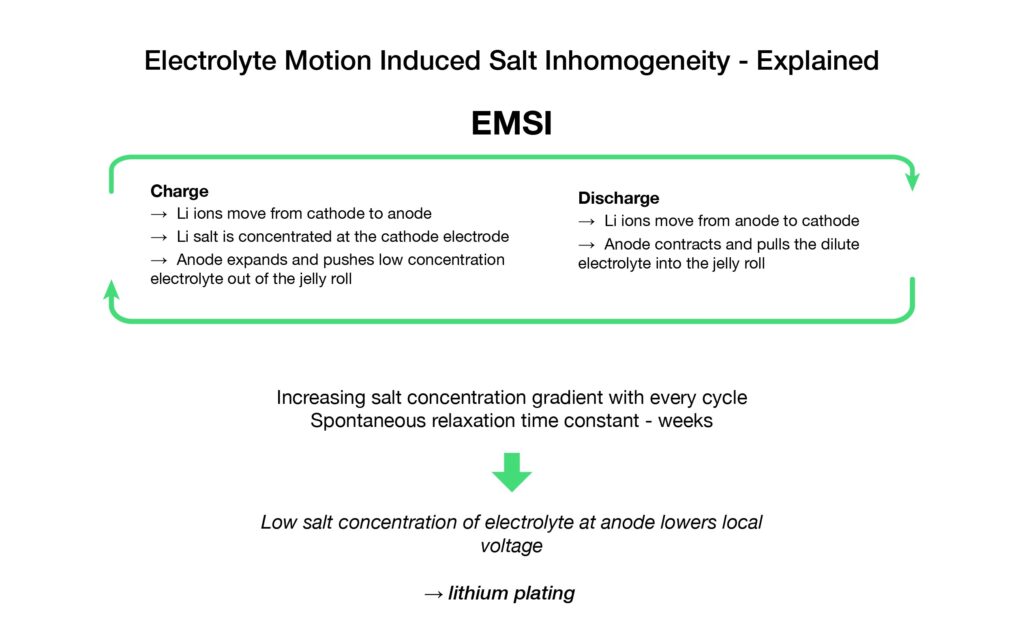
EMSI, or Electrolyte Motion induced Salt Inhomogeneity, describes the formation of uneven electrolyte salt concentration inside the battery cell during cycling. As lithium ions move in and out of the active materials, the electrodes expand and contract. This movement can act like a pump for electrolyte, pushing and pulling electrolyte through the cell during charge and discharge. Over repeated cycles, especially when rest time is limited, this process can create localized salt concentration gradients.
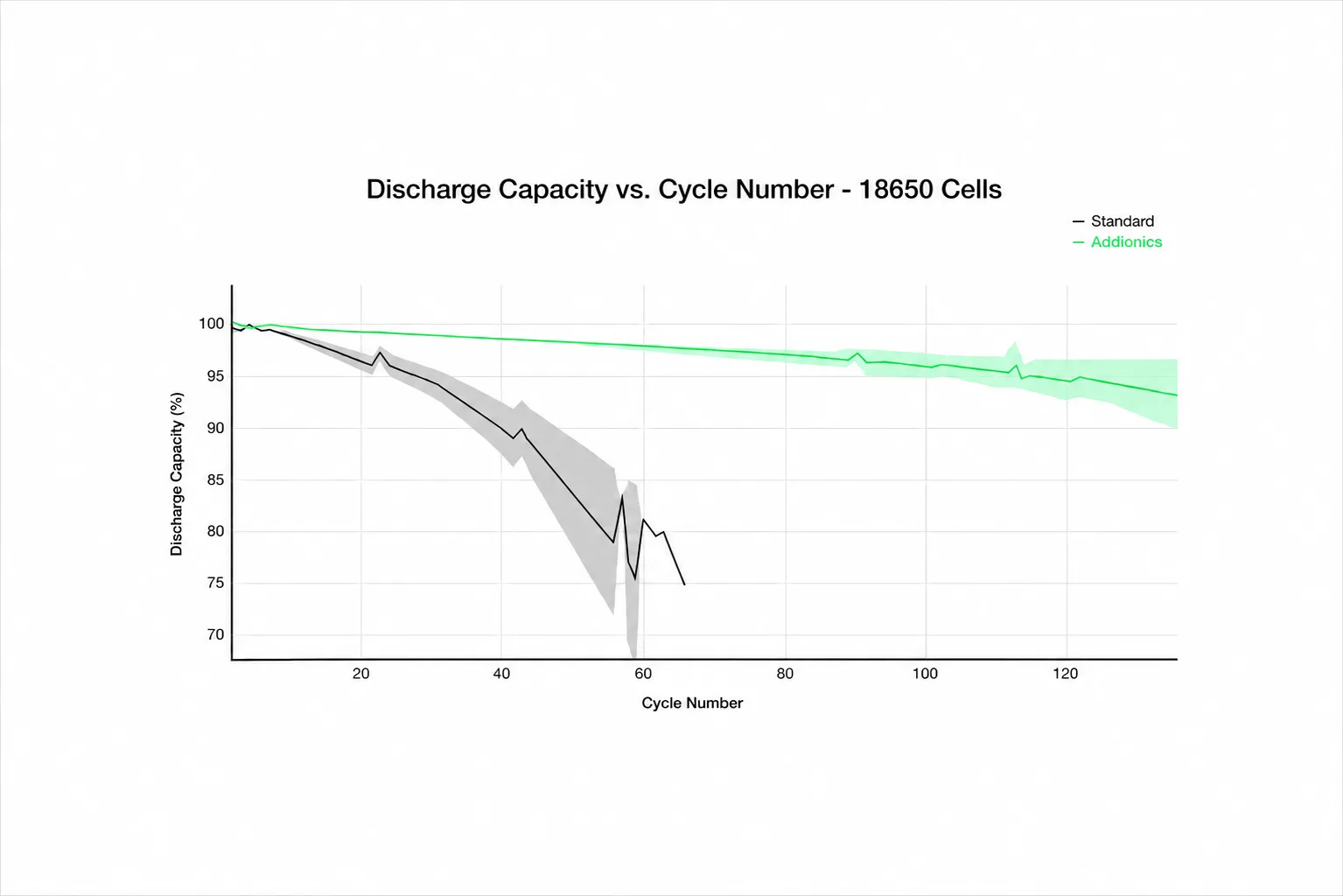
These gradients make ion transport less uniform, increase localized overpotentials, and raise the risk of lithium plating, active lithium loss, capacity fade, and reduced battery lifetime.
In applications with long rest periods, the cell may have time to partially recover between cycles. But in high-utilization applications, the battery often enters the next cycle before internal electrolyte concentration has returned closer to equilibrium.
Why It Matters for 24/7 Applications
For continuous-operation systems, EMSI is not only a cell-level technical issue. It can become an operational and economic limitation.
A robotaxi that needs more time to charge or recover generates fewer paid miles. An autonomous truck with reduced usable capacity may face more route interruptions. A drone fleet with faster degradation may need more spare batteries or more conservative mission planning. In robotics, battery downtime reduces productive hours. In space, battery degradation can directly affect mission life.
Today, one way to manage battery degradation in high-utilization EV fleets is to operate within a narrower state-of-charge window rather than using the full rated capacity of the cell. By limiting operation to only part of the battery’s nominal capacity, for example 20% to 80% or 25% to 75%, operators can help protect lifetime, safety, and reliability. But this also means that a significant share of the battery pack remains unused during normal operation.
The impact can be significant. For example, if improved cell architecture allows a robotaxi to expand its usable battery window from 50% to 70%, the same pack can deliver 40% more usable energy. In practice, that can mean longer operating time between charging events, less need for battery oversizing, and better fleet economics.
This is why EMSI becomes especially important as electrification moves toward machines and platforms that need to operate with minimal rest.
Solving EMSI with Addionics Autonomous Architecture™
Conventional lithium-ion cells still rely on flat metal current collectors. These foils conduct electrons and support the active material, but they are solid and impermeable. They do not provide through-plane pathways for electrolyte movement, and they do not actively support salt redistribution inside the electrode structure.
For EMSI, this is a structural limitation. If the problem is driven by uneven electrolyte movement and salt concentration gradients, then the solution must address how electrolyte, ions, and current move inside the cell.
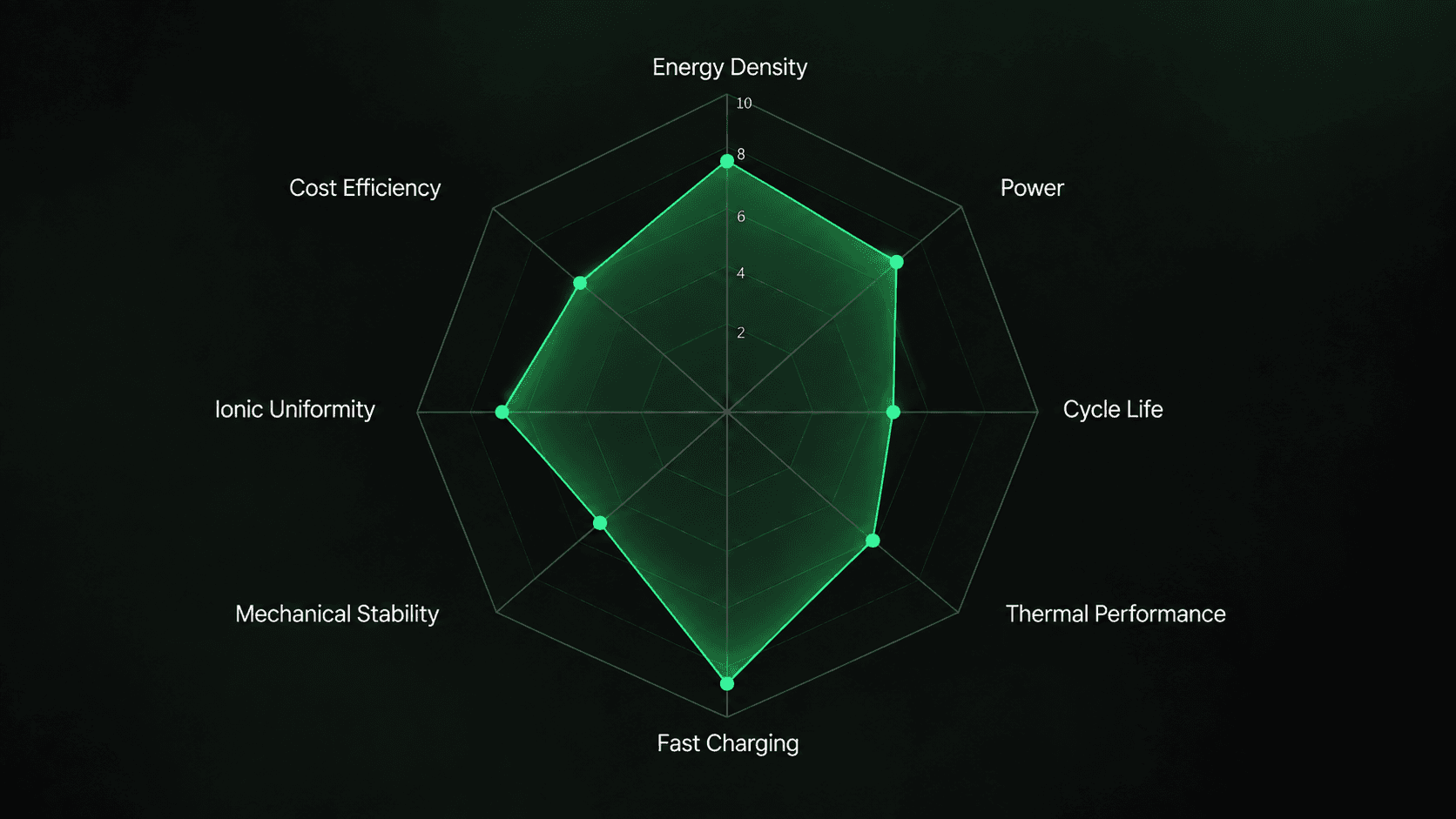
Addionics Autonomous Architecture™ is designed for batteries that need to operate under continuous stress. At the core of this architecture are Smart Porous 3D Current Collectors, which replace conventional flat foils with a conductive, porous, three-dimensional metal structure.
Instead of acting only as a passive conductive layer, the current collector becomes part of the cell’s internal transport architecture. The porous 3D structure supports more uniform electrolyte movement, improves salt homogeneity, and helps stabilize ion transport during intensive cycling.
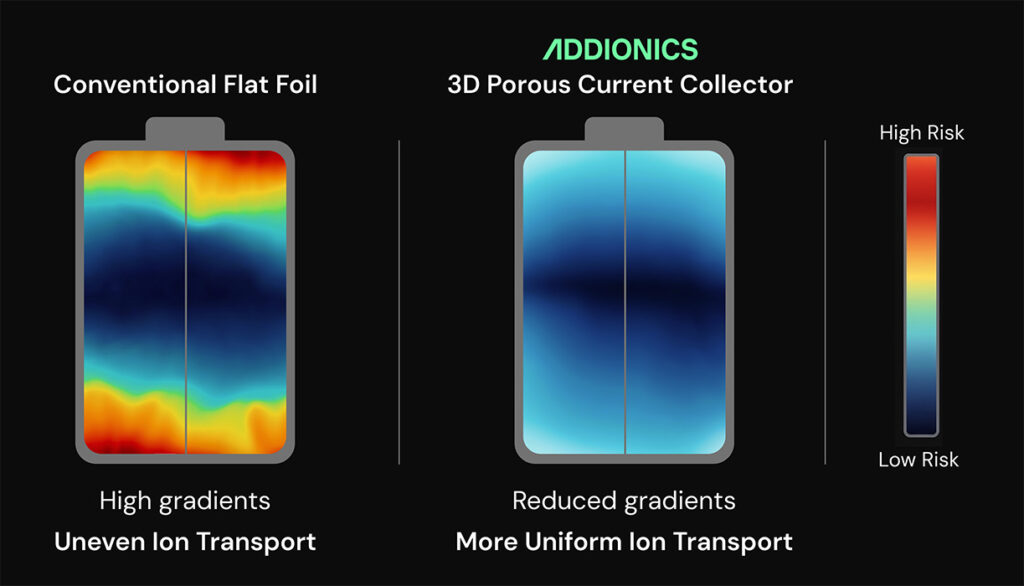
This is the critical shift: EMSI is not only a chemistry or electrolyte issue. It is also an architecture issue. For 24/7 applications, better batteries will require internal cell structures designed for fast charging, rapid redeployment, and continuous use.
As autonomous fleets, robotics, drones, trucks, and space platforms scale, battery architecture will determine how long these systems can operate, how quickly they can return to service, and how reliably they can perform over time.
Addionics is building the battery architecture designed for that reality.