Autonomous Truck Unit Economics Depend on Better Batteries
Robotaxis are entering cities, drones are expanding into delivery and defense, robots are moving through warehouses and factories, and autonomous trucks are becoming part of the future of freight.…
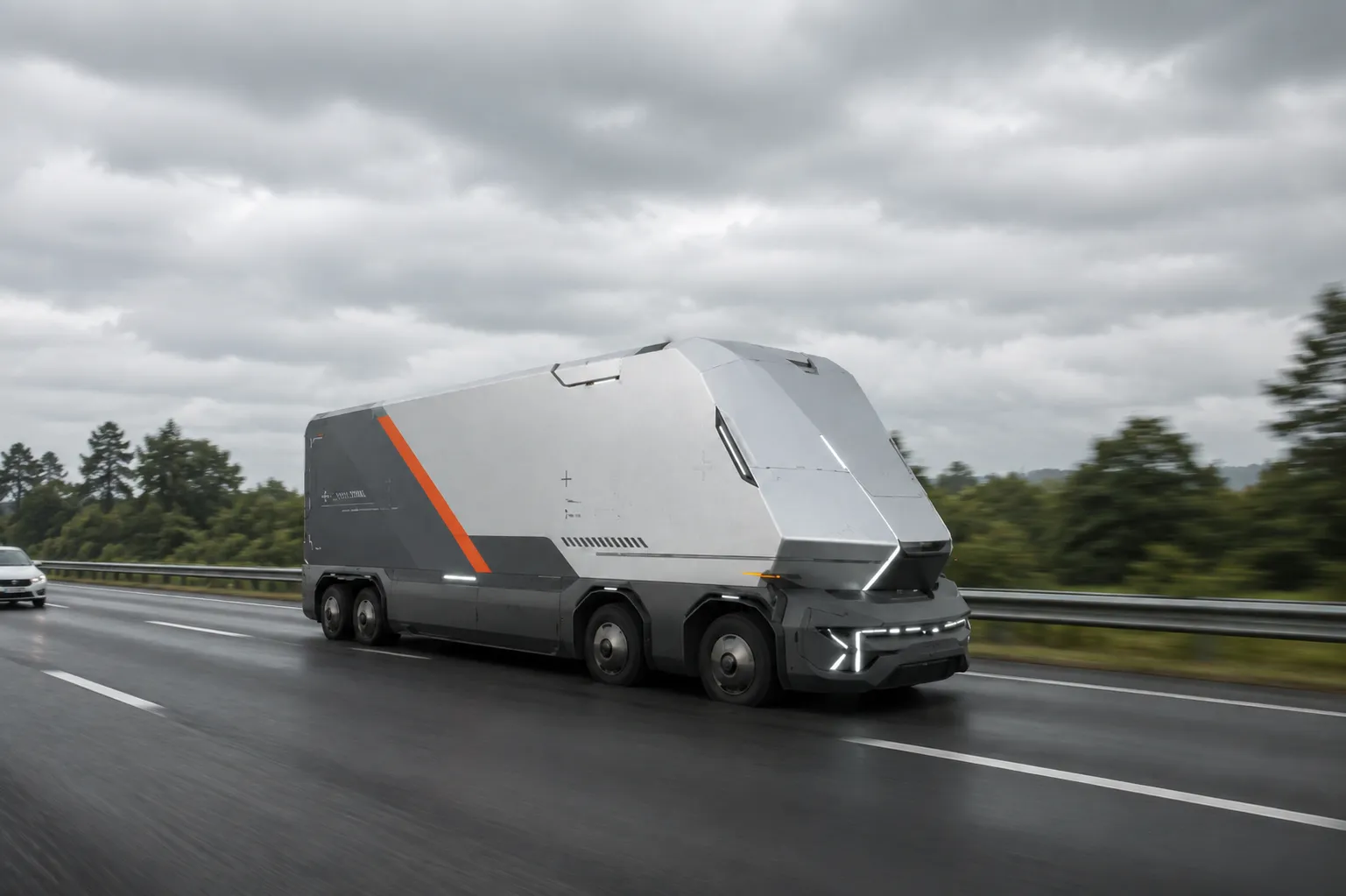
Robotaxis are entering cities, drones are expanding into delivery and defense, robots are moving through warehouses and factories, and autonomous trucks are becoming part of the future of freight. These systems are designed around a new operating logic: more uptime, less human intervention, faster redeployment, and higher utilization.
Autonomous trucks are one of the clearest examples of this shift. They are moving from future concept to logistics infrastructure, where their value will depend on how reliably they complete routes, how quickly they recharge, and how predictably they perform across changing conditions.
For decades, batteries were designed around human patterns of use: vehicles stop, drivers rest, devices sit idle, and cells have time to recover between charge and discharge. That recovery time helps today’s batteries maintain internal balance before the next cycle begins.
Autonomous fleets create a different demand. Trucks may discharge, fast charge, and return to service repeatedly with limited recovery time, creating a need for batteries that can operate reliably under continuous cycling.
In autonomous trucking, energy storage becomes part of the operating model.
Electric trucks already place significant pressure on the battery system. Long routes, heavy loads, highway speeds, climbing, strict delivery schedules, and high-power charging all require stable energy and power delivery. Autonomous operation increases that pressure because the business case depends on keeping vehicles active for longer periods with fewer interruptions.
For fleets, downtime means lost revenue. Every hour a truck spends charging, recovering, or out of service is an hour it is not moving freight. At scale, even small battery limitations can reduce asset utilization and weaken the economics of the entire logistics network.
High-utilization trucks place cells under repeated charge-discharge cycles, high daily energy throughput, fast recharge, rapid redeployment, and limited rest time between operations. This duty cycle creates stress inside the cell. Internal concentration gradients have less time to relax, local imbalances can intensify, and degradation mechanisms such as lithium plating and capacity fade become harder to manage.
Cold weather adds another layer. Autonomous trucks will need to operate through winter routes, cold depots, mountain corridors, and long-haul conditions where temperature directly affects battery performance.
As temperature decreases, electrolyte transport slows, charge-transfer reactions become more resistive, lithium diffusion becomes less efficient, and polarization increases. During discharge, the cell can reach its voltage cutoff before the active materials are fully utilized. Energy may remain inside the battery, but part of it becomes inaccessible at the required power level.
For heavy-duty trucks, this can affect route completion, acceleration, climbing, charging schedules, and operational flexibility. A cold battery may also need to limit charging power or spend time and energy reaching a safer operating temperature before accepting high-power charging. For logistics fleets, this can create schedule delays, lower charger productivity, and less predictable asset utilization.
Addionics addresses these limitations from within the cell.
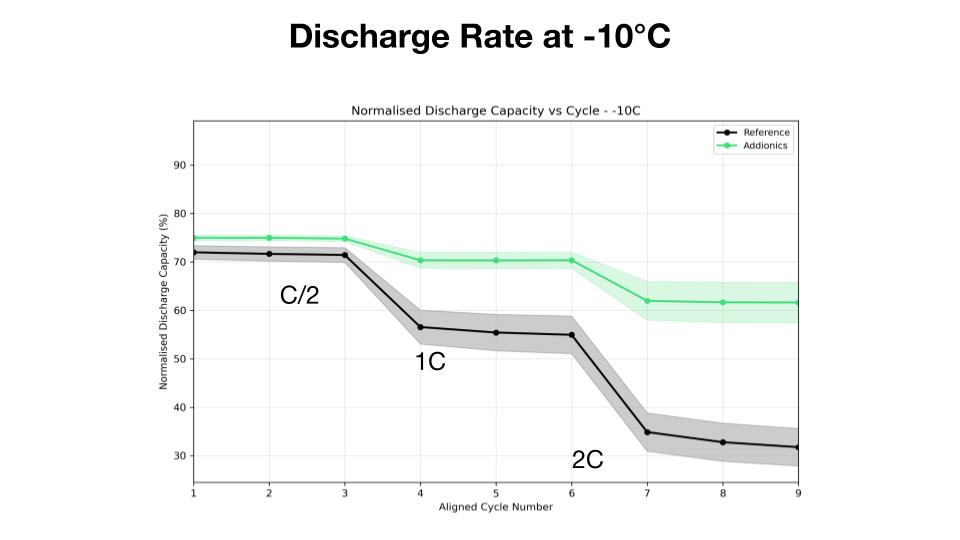
In conventional electrodes, flat metal current collectors conduct electrons but are impermeable to electrolyte. Lithium ions access much of the electrode from one direction, creating longer transport pathways and less uniform electrochemical activity, especially under high-rate, low-temperature, or continuous-use conditions.
Addionics Smart Porous 3D Current Collectors replace conventional flat foils with a conductive, porous, three-dimensional metal structure. This creates additional pathways for electrolyte and lithium ions through the electrode, reducing effective transport distances and supporting more uniform reactions across the active material.
For autonomous trucks, this architecture can support better active-material utilization, stronger low-temperature performance, more stable charging behavior, and improved durability under repeated operation.
As autonomous trucking scales, battery architecture will become a core part of route reliability, fleet economics, and real-world deployment. The trucks may drive the route, but the battery will determine how reliably that route can be completed.