Robots Have a Battery Problem
Robots now work shifts that never end, yet their batteries were designed for a world with pauses. Why always-on robots need cells built for how they work.
Why always-on robots need batteries built for how they work
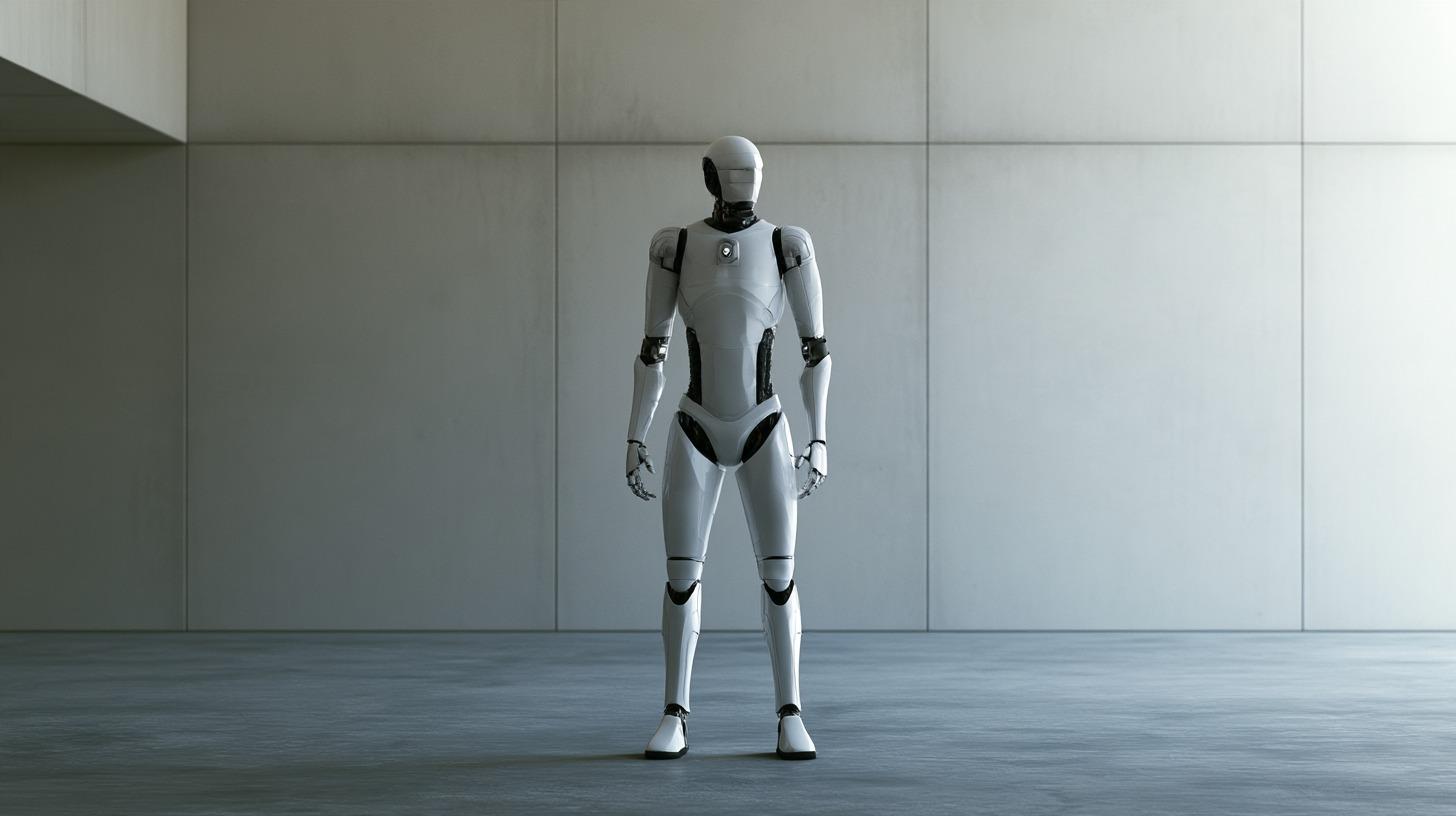
It's 3 a.m. in a fulfillment center. The people went home hours ago, but the floor is still moving. Robots lift, sort, and carry without a break, and soon humanoids will be walking the same aisles.
This is no longer a vision of the future. More than 5 million industrial robots now work in factories worldwide, and humanoids are close behind, with global shipments expected to exceed 50,000 units in 2026. Robots are moving out of the lab and onto shifts that never end.
These machines are bought for one reason: to keep working. Every hour on the charger is an hour of lost output, so their value is measured in uptime, utilization, and how quickly they get back to work. Yet the batteries inside them were designed for a world with pauses.
Robots Are Expected to Work Around the Clock
Phones, laptops, and private cars follow human routines. They are used, parked, and charged overnight, and the battery gets time to rest between cycles. Robots do not run on human schedules.
Today, most humanoid robots deliver only two to four hours of runtime from batteries generally under 2 kWh, while operators are looking for five to eight hours per shift. Space and weight inside a robot are limited, so the gap cannot be closed simply by adding more cells.
The industry is closing it in two ways: higher energy density cells, and operating models built on fast charging or battery swapping. Both point in the same direction. Cells are asked to store more energy in less space, then charge and discharge again and again with little or no rest in between.
The Hidden Cost of Charging Without Rest
That duty cycle is demanding for lithium-ion batteries, and especially for high energy density cells. Inside every cell, lithium ions and electrolyte must move through the cell at the rate of charge and discharges. When cycles are fast and back to back, that movement starts to fall behind.
One mechanism has drawn growing attention: Electrolyte Motion induced Salt Inhomogeneity, or EMSI. As the electrodes expand and contract during cycling, electrolyte is pushed out of the electrode stack and pulled back in, leaving uneven salt concentrations across the cell. It affects large-format cells under high compression, exactly the direction energy dense robot batteries are heading. In a study of prototype 4695 cells at about 800 Wh/L, salt concentrations at the edges and center deviated by more than ±50% from the average after only 18 cycles. After 130 fast-charge cycles, the affected cells lost 24% of their capacity.
These imbalances increase resistance, reduce usable capacity, and can lead to localized lithium plating. Rest gives the electrolyte time to rebalance. Robots expected to work 24/7 rarely get that rest. The result is a costly trade-off: slow down operations to protect the battery, or accept faster degradation, more frequent replacements, and more downtime later.
Where Robot Batteries Are Made Now Matters Too
Performance is only half the challenge. Where batteries are made is becoming just as important.
On July 28, 2026, the FCC added foreign-produced advanced robotic devices to its Covered List, presumptively barring new models from the U.S. market. To count as domestic, a robot must be made in the United States, with domestic components exceeding 65% of its total component cost, a threshold set to rise in 2029.
The battery is one of a robot's most valuable components, and China made well over 80% of the world's batteries in 2025. For robotics, as already in defense and drones, a domestic battery supply chain is becoming a requirement, not a preference.
Building Batteries for Always-On Robots with Addionics
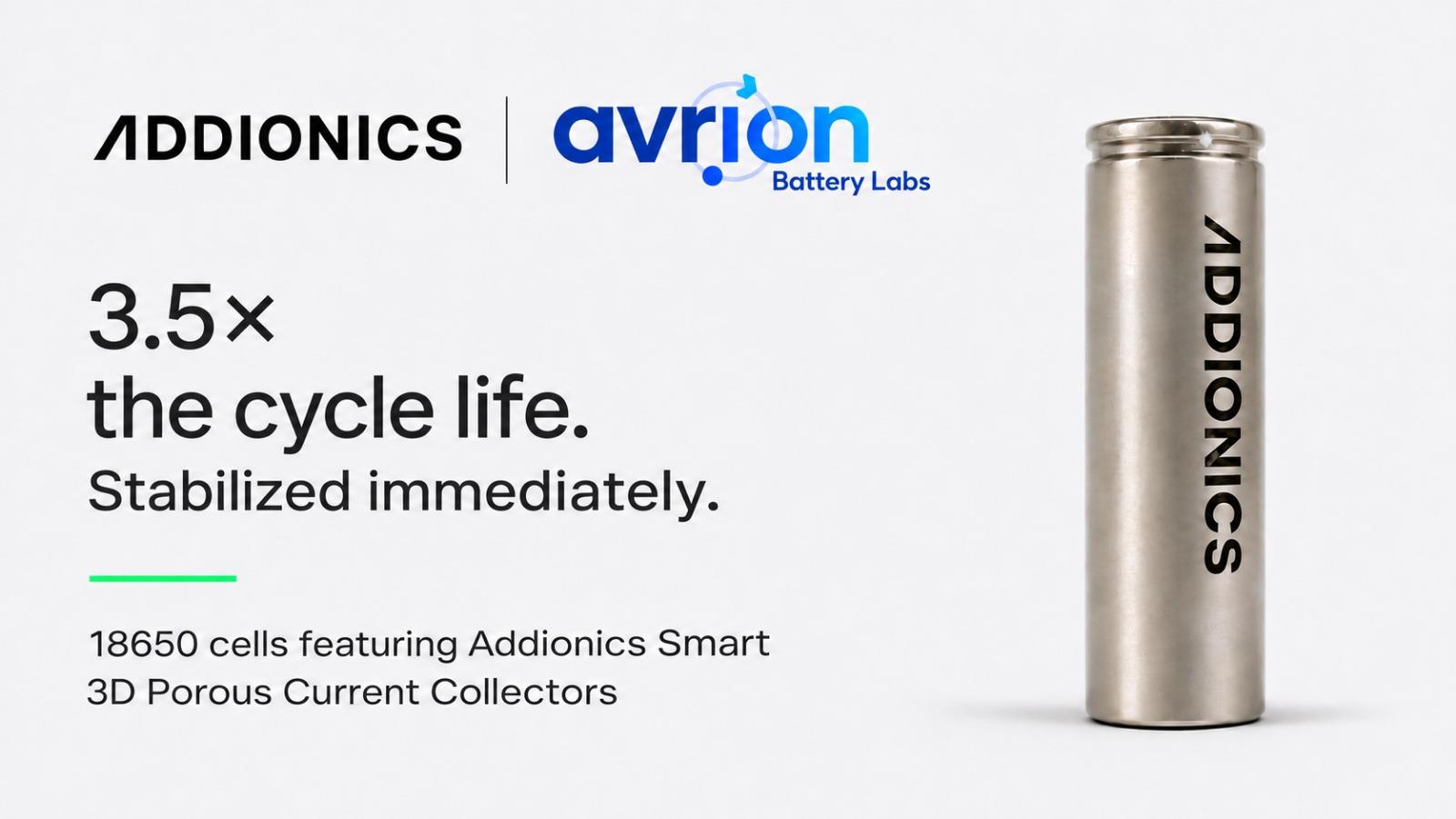
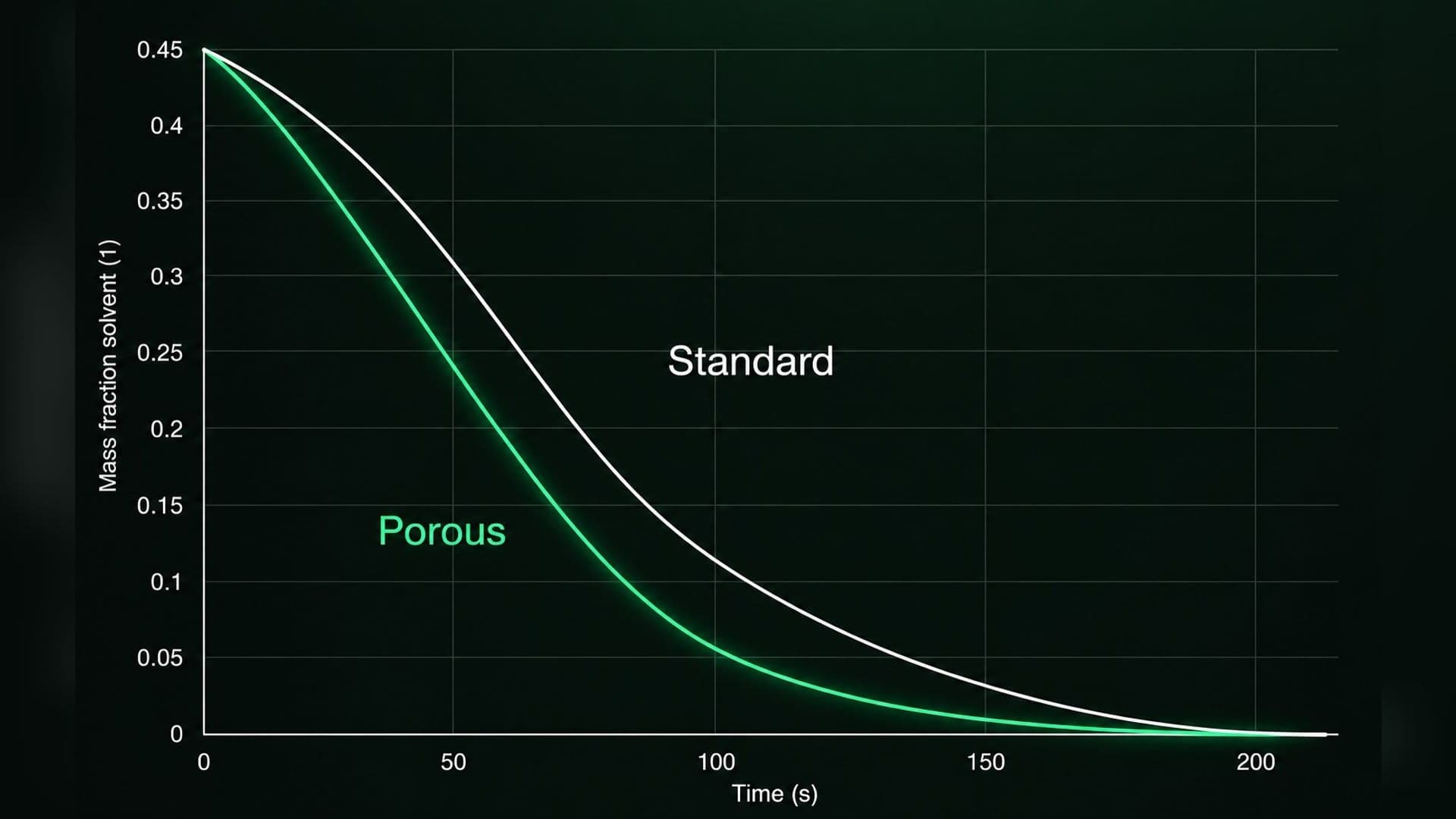
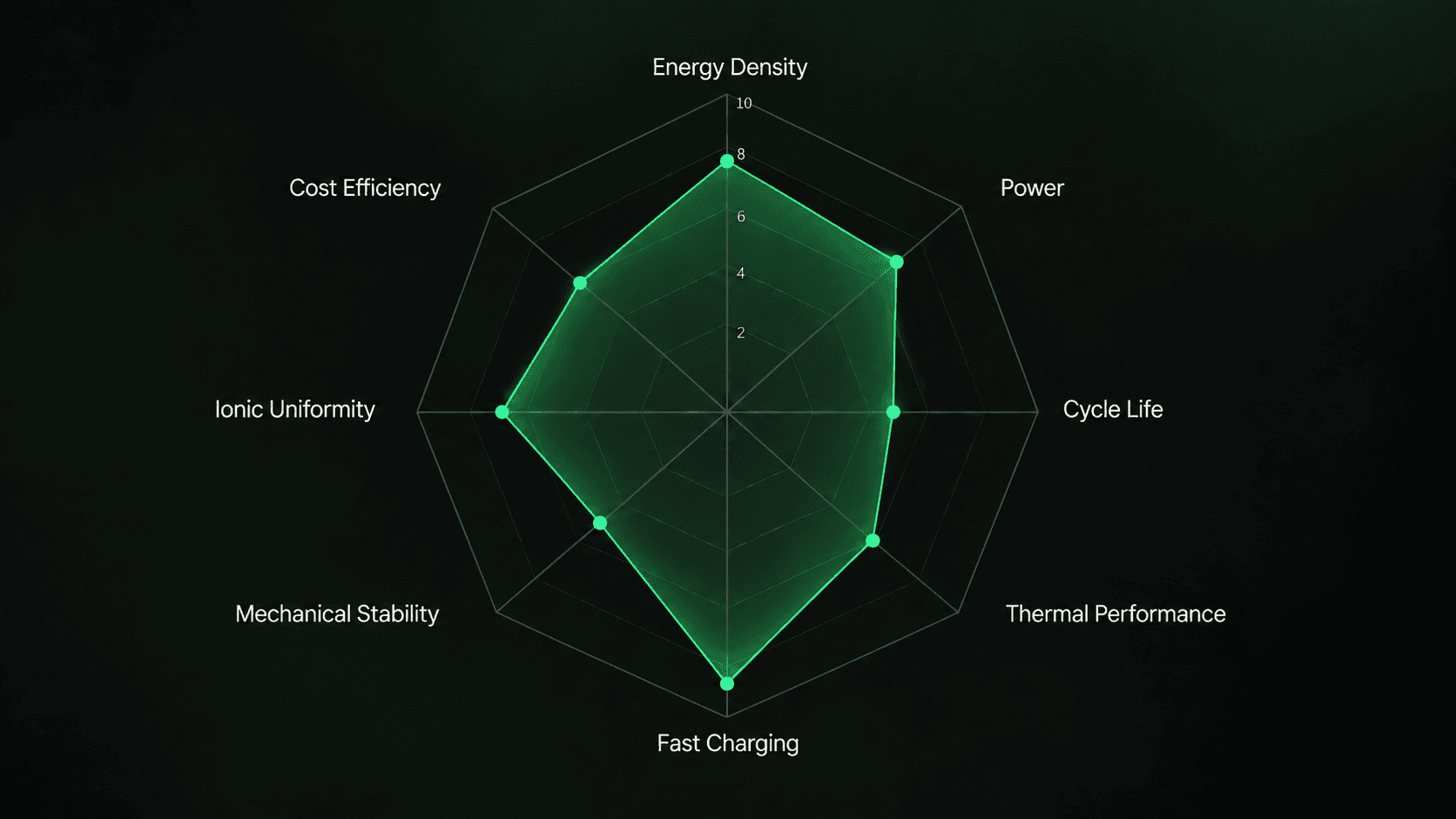
Addionics tackles this problem inside the cell. Its Smart 3D Porous Current Collectors replace flat metal foil with a porous and three-dimensional structure, so electrolyte and lithium ions move through the current collector, not just around it.
More transport pathways keep salt concentration more uniform under repeated cycling, countering the imbalances behind EMSI. The result is high energy density cells that need less rest, the core requirement for robots expected to work 24/7.
Because the technology is built for existing chemistries and production lines, it can scale with the new U.S. cell capacity the robotics industry now needs.
Robots need batteries built for the way they actually work: continuously.