Technology
Redefining battery architecture
Addionics is a Smart Metals manufacturer transforming the battery cell from a stack of isolated layers into a unified electrochemical system through Smart 3D Porous Current Collectors. These copper and aluminum current collectors improve battery performance across cell formats and chemistries, from today's lithium-ion systems to emerging battery technologies.
Addionics is the first company to unlock a scalable, cost-effective production process for both anodes and cathodes: connecting electrode architecture with battery performance and manufacturing optimization.
01How the architecture works
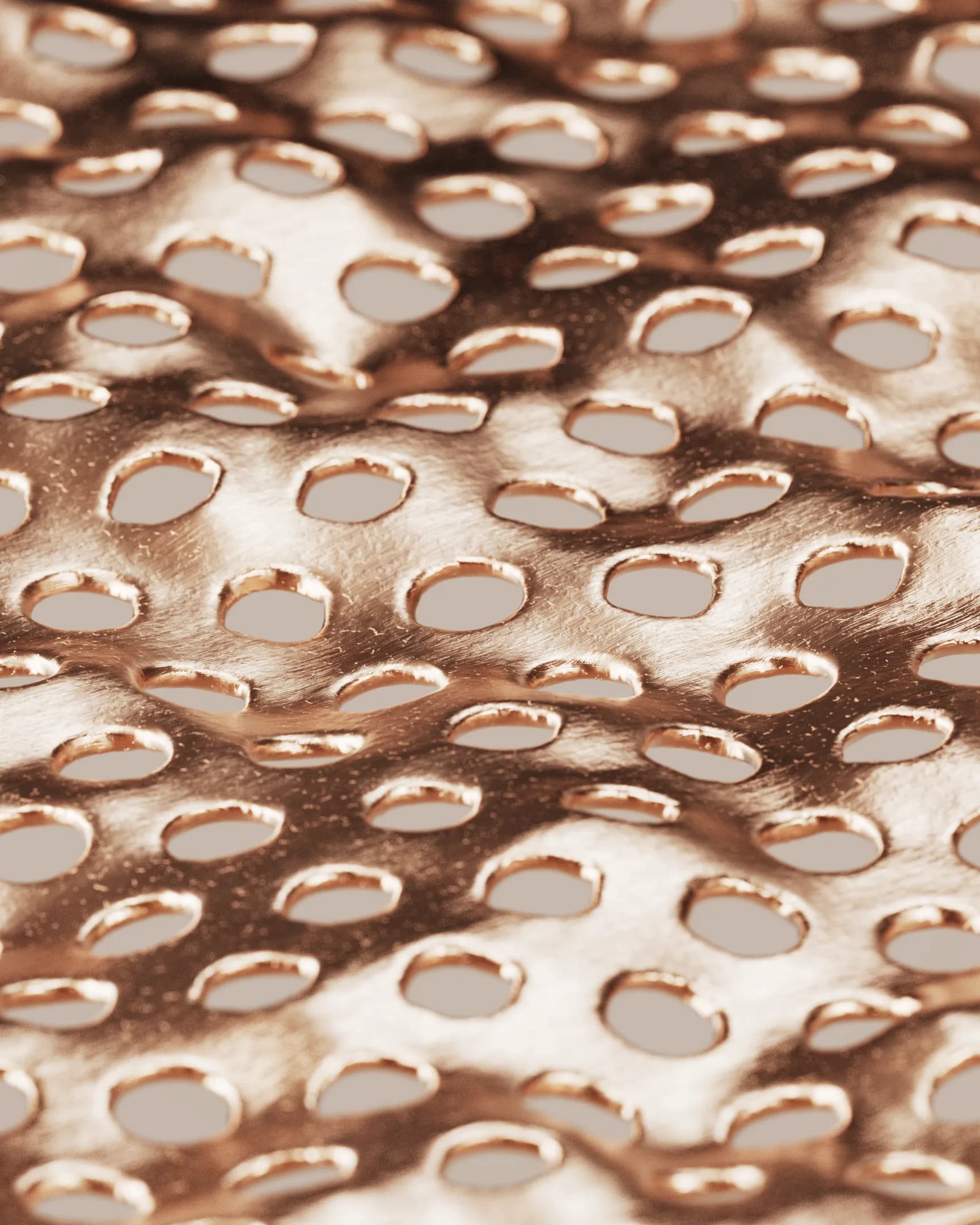
Conventional current collectors are flat, solid metal foils. Addionics replaces them with a porous, ion-permeable metal architecture that creates new pathways through the electrode and changes how the cell transports energy, ions, electrolyte, and heat.
Improved ionic and electrolyte transport
The porous structure creates through-plane pathways for lithium ions and electrolyte, shortening transport distances and supporting more uniform electrochemical activity across the cell.
Lower internal resistance
The interconnected metal structure improves electrical conductivity and lowers contact resistance, supporting faster charging, higher power, and reduced heat generation.
Higher active material loading
Improved adhesion and transport enable thicker electrodes and higher active material loading, increasing energy density without increasing cell size.
More uniform current, heat, and salt distribution
More balanced transport and current distribution reduce localized hot spots and support improved electrolyte salt homogeneity during repeated cycling.
02What it produces
Higher energy density
Faster charging
Longer battery life
Improved thermal performance and safety
03The platform
Application-specific design using AI
Addionics' patented AI platform uses advanced structural modeling and machine learning to design the optimal current collector architecture for each application.
By analyzing how different structures influence battery performance at the cell and electrode level, the platform identifies the optimal geometry based on chemistry, cell format, use case, and system-level requirements.

Fig. 02 · Cell design against a conventional-foil baseline. Figures are from the Addionics cell-design demonstrator, supplied by Addionics, and are not a product specification.
04Manufacturing
Designed for performance. Built for scale.
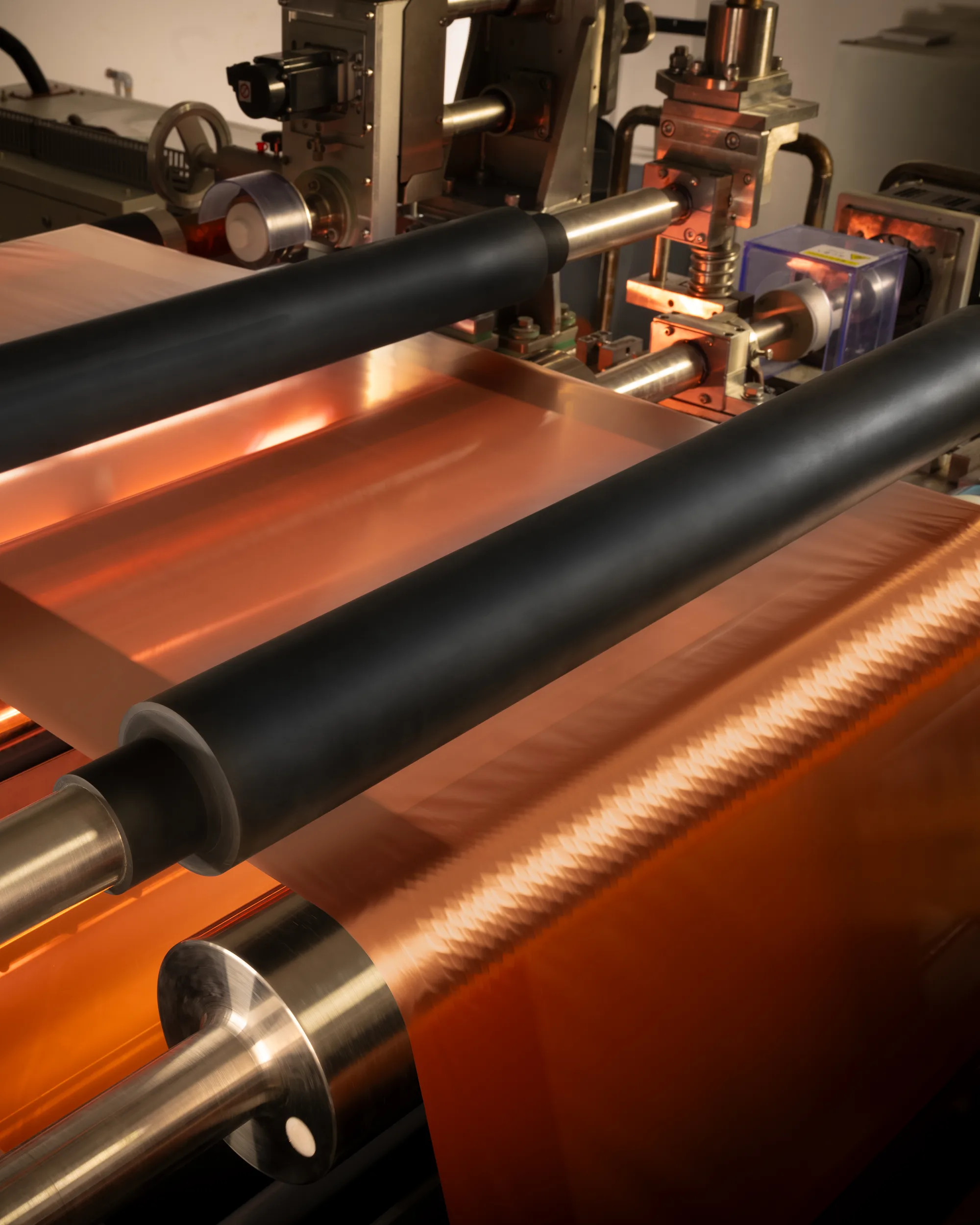
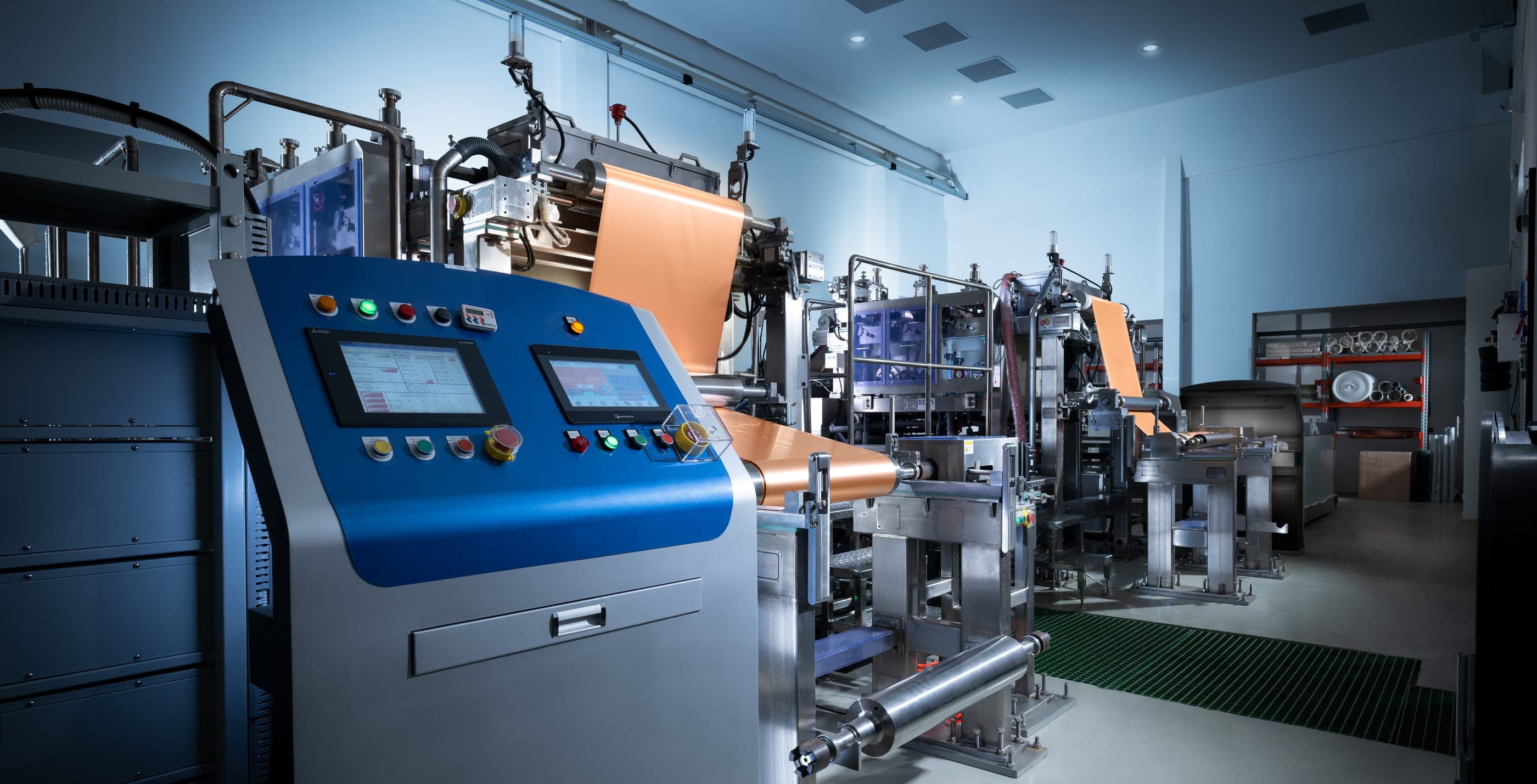
Addionics' core IP includes the manufacturing process used to produce porous copper and aluminum current collectors at industrial scale. By leveraging commodity-based materials and established manufacturing methods, Addionics has developed a cost-effective, high-volume production process designed for the battery industry.
Addionics supplies current collectors for direct integration into customers' existing production environments.
100% integration
Designed for integration into existing customer manufacturing facilities and cell assembly processes.
Continuous roll-to-roll production
Continuous roll-to-roll manufacturing designed to maintain product uniformity and avoid bleed-through or coating defects.

Validated across key processes
Validated across coating, drying, calendering, slitting, and cell assembly processes.
- 01
Faster drying
- 02
Faster electrolyte wetting
- 03
Reduced formation gas
- 04
Fewer electrode layers
- 05
Dry-coating compatibility
05Chemistries
One platform. All chemistries.
Smart 3D Current Collectors can be optimized for today's leading battery chemistries and for the next generation of energy-storage technologies.
LFP
Improved conductivity, active material loading, and energy density.
NMC
Higher loading, faster charging, and improved mechanical stability.
Silicon-based anodes
Improved management of expansion and cycling-related degradation.
Solid-state and lithium-metal
Support for thicker electrodes, improved ion transport, and greater structural stability.
And more
These four are examples, not limits. The platform works with all of today's leading chemistries, and with the next generation as it matures.
06Position
What is on the record
- Current collectors, manufacturing, battery design, electrode integration18Patent families
- 47Filings
- 9Granted
Patent position as of 2026.
In production with partners
Addionics is working with PNT, a Korean battery manufacturer, on batteries for data centres. Collectors ship today for integration and testing on existing lines.
07Common questions
What is a Smart 3D Current Collector?
Conventional current collectors are flat, solid metal foils. Addionics replaces them with a porous, ion-permeable metal architecture that creates new pathways through the electrode and changes how the cell transports energy, ions, electrolyte, and heat.
Which battery chemistries does it work with?
Smart 3D Current Collectors are chemistry-agnostic. They can be optimized for today's leading battery chemistries and for the next generation of energy-storage technologies, from lithium-ion systems to emerging battery technologies.
Does it require new manufacturing equipment?
No. It is a drop-in change that integrates with existing coating and production lines through a roll-to-roll manufacturing process, and is compatible with all battery chemistries and formats.
How much does it improve energy density?
Higher electrode loading increases energy and power density without increasing the cell footprint, for a measured improvement of up to 15% in energy density and up to 50% in cycle life.
Why does a porous current collector improve performance?
The porous structure creates through-plane pathways for lithium ions and electrolyte, shortening transport distances. The interconnected metal structure lowers internal resistance and contact resistance, and more balanced current distribution reduces localized hot spots during repeated cycling.
What are the anodes and cathodes made from?
Copper and aluminum. Addionics is the first company to unlock a scalable, cost-effective production process for both anodes and cathodes, connecting electrode architecture with battery performance and manufacturing optimization.